Peru's Overview
Peru is the capital of South America and the heart of the ancient Inca Empire. It is a land of extreme geography, split into three distinct zones, the arid desert Coast (Costa), the soaring Andes Mountains (Sierra), and the dense Amazon Rainforest (Selva). The nation filled with colors, deeply indigenous, In Quechua you will see people wearing the traditional dress which is common Lima (The Capital City) is filled with modern vibe, a bit chaotic and centered around world-class food scene.
Even though crimes are common in cities but the country is generally safe for tourists. I would recommend Sticking to safe districts like Miraflores, Barranco, and San Isidro. Avoid the city center (Historic District) late at night or at least take a companion with you. Political protests are pretty common and Strikes (paros) can occasionally block highways or train tracks. Always check local news before traveling between regions by bus.
Note: – Do not fly into Cusco and hike immediately. Spend your first 2 days acclimatizing, drinking Coca Tea (legal and everywhere), and eating light. As travelers might get altitude sickness (shortness of breath, headaches, or nausea).
Flights And Transportation
Jorge Chávez International Airport (LIM) in Lima is the gateway. Almost all international flights land here. Due to the geography travel may seem slow. A distance that looks short on a map might take 18 hours by bus due to winding mountain roads. So flying is the best way to cross the mountain ranges. LATAM is the most reliable carrier (essential for Cusco as they have the best technology for cloudy mountain landings). Low-cost carriers like Sky and JetSmart are cheaper but stricter on baggage.
You can also take a train, especially when going to Machu Pichu since there is no route from bus. You must take a train (from Ollantaytambo or Poroy) unless you are hiking. PeruRail and Inca Rail offer services ranging from budget “Expedition” class to the ultra-luxury “Hiram Bingham.” Book these months in advance as they can get full.
Taking a Bus is also a really good option, unlike many countries, long-distance bus travel in Peru is excellent. Companies like Cruz del Sur and Oltursa offer “VIP” seats that recline 160–180 degrees (full beds), with meal service. It is a safe and comfortable way to travel the coast or overnight to the mountains. In the cities rent a car or use ride-hailing apps like Uber or Indrive. Another alternative is to ride Mototaxis, these three-wheeled rickshaws are the standard way to get around cheaply especially in smaller towns (like Ica or the Sacred Valley),
Budget
While Machu Picchu may get pretty expensive, the rest of the country is very affordable. For Backpackers (Budget travelers) spending anywhere from around (S/ 150 – 250 / ~$40 – $65 USD) per day would be enough for transportation, accommodation and food. For Mid-Range to Luxury tourists spending around (S/ 350 – 1500+ / ~$90 – $400+ USD) can get you amazing experience.
Things To Do
Peru is a “Bucket List” heavy destination. From the mysteries of the Incas to the biodiversity of the Amazon, the scale of attractions here is massive. In this short guide I will only be listing the main destination.
Read More : –
The Incan Heartland (Cusco & Sacred Valley)
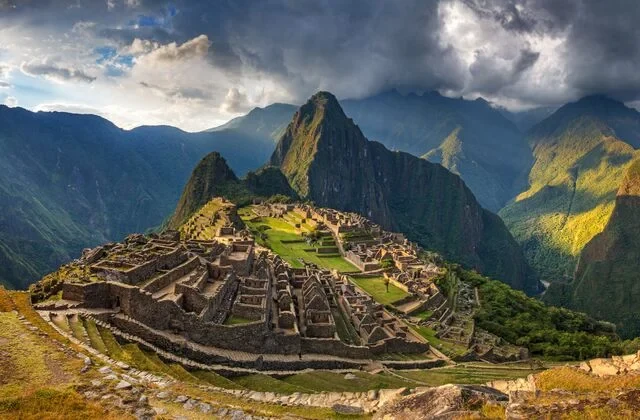
Machu Picchu: The Lost City. You must book tickets months in advance. There are different circuits; Circuit 2 is the classic view.
Cusco City: The former Inca capital. Walk the cobblestone streets, see the 12-Angled Stone, and visit Sacsayhuamán.
The Sacred Valley: Lower in altitude than Cusco. Towns like Pisac (market/ruins) and Ollantaytambo (living Inca city) are stunning.
Lima (The Gastronomy Capital), Don’t skip Lima. Stay in Miraflores (cliffs overlooking the ocean) or Barranco (bohemian arts district). Eat Ceviche (raw fish cured in lime) only for lunch, never dinner (it’s a freshness rule).
The Desert Coast, Huacachina: A tiny oasis surrounded by massive sand dunes. Go dune buggying and sandboarding here. Paracas: Take a boat to the Ballestas Islands (Poor Man’s Galapagos) to see sea lions and penguins.
When To Visit
The best time to visit Peru is during the dry season (May to September), especially if you plan to explore the Andes, Machu Picchu, and highland regions.
May to September offers sunny days, clear skies, and ideal trekking conditions on popular routes like the Inca Trail.
Summer (December to March) is the wet season in the Andes, with frequent rain and muddy trails, though the Amazon region is still accessible.
Shoulder months (April and October) can also be good, with fewer crowds and moderate weather.
Best overall months: June, July, August, and September.