Switzerland's Overview
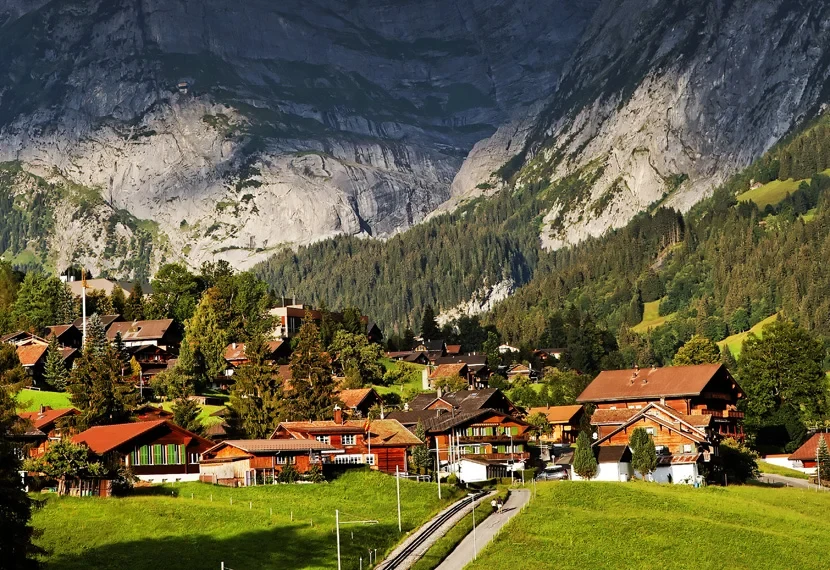
Switzerland is a landlocked country in Central Europe that defines “alpine luxury.” It is famous for its dramatic mountain peaks (the Alps cover 60% of the country), pristine turquoise lakes, and medieval old towns. You can hike a glacier in the morning and be back in a world-class city for a fine-dining dinner by evening.
It is divided into three main regions: the German-speaking north/east (Zurich, Lucerne, Bern), the French-speaking west (Geneva, Lausanne), and the Italian-speaking south (Lugano, Ticino).Switzerland is consistently ranked as one of the safest countries in the world with very low crime rates.
Flights And Transportation
There are 3 main airports in Switzerland, Zurich Airport (ZRH) being the largest international hub, Geneva Airport (GVA): The second largest. Best for the West region, Euro Airport Basel-Mulhouse-Freiburg (BSL), A smaller hub often served by budget airlines
Switzerland has one of the most dense and efficient public transport networks globally. Renting a car is often unnecessary and can be a hassle due to parking costs and traffic regulations. You can book taxis in ride-hailing apps like Uber or Bolt and also take Trains for long distances. You can also get “The Swiss Travel Pass”, this is the “golden ticket” for tourists. It offers unlimited travel on trains, buses, and boats for 3, 4, 6, 8, or 15 days. It also includes free entry to over 500 museums and mountain excursions to peaks like Rigi and Stanserhorn.
Budget
Is it expensive? Yes. Switzerland is widely considered one of the most expensive countries in the world. Prices for food, accommodation, and services are significantly high than other countries. If you are thinking of going in a budget you will still end up spending USD $120-$200 (95-180 CHF) per day.
Things To Do
Switzerland caters to both adrenaline junkies and culture lovers.
For the adrenaline junkies you can try hiking through the The Big Three Mountains, The Matterhorn (Zermatt), Jungfraujoch (Interlaken/Grindelwald): Known as the “Top of Europe,” this is the highest railway station on the continent, offering year-round snow and glacier views and Mount Pilatus (Lucerne). Also try skiing or snowboarding if you go during the winter season.
For those interested in the Cities & Culture of the country visit Bern Old Town: A UNESCO World Heritage, Château de Chillon (Montreux): A fairy-tale medieval castle. Don’t forget to try the famous Swiss Cheese, chocolates and pastries.
When To Visit
The best time to visit Switzerland depends on the activities, but summer (June to September) and winter (December to March) are the most popular seasons.
Summer offers warm weather, green landscapes, and perfect conditions for hiking, scenic train rides, and lake activities.
Winter is ideal for skiing, snowboarding, and enjoying snowy Alpine villages.
Spring (April to May) and autumn (October to November) are quieter shoulder seasons with fewer crowds and lower prices.
Best overall months: July, August, February, and March.